You step outside Toronto Pearson or Vancouver International and the cold hits you like a wall. It’s minus-12 outside, but somehow inside the terminal it’s 22 degrees. Then you board the plane and it’s freezing again. Sound familiar?
Dressing for a Canadian flight isn’t just about looking good — it’s a small tactical challenge. Get it wrong and you’re either sweating through security or shivering in your seat for three hours. The good news? The fix is simple: master the art of layering, and you’ll nail airport fashion for cold Canadian flights every single time.
Why Canadian Flights Demand a Different Packing Mindset
Terminal Temps vs. Cabin Temps
Canadian airports are generally well-heated, but step outside or into a jetway and the temperature drops fast. Cabin temperatures, on the other hand, vary wildly — Air Canada and WestJet flights can swing between feeling like a sauna and a refrigerator depending on the route, the aircraft, and how many people are onboard.
This is why packing your coat in your carry-on instead of wearing it is one of the worst moves you can make. You’ll need it on and off multiple times before you’re even airborne.
Domestic vs. Long-Haul Routes from Canada
Flying Calgary (YYC) to Montreal is a very different experience than flying Toronto (YYZ) to London or Vancouver (YVR) to Tokyo. On longer transatlantic routes, cabin temperature drops more noticeably during cruising altitude. Planning your outfit with the full journey in mind — not just the first hour — makes a real difference.
The Core Airport Fashion Formula for Cold Canadian Travel
Think of your outfit as three distinct layers, each doing a specific job. This isn’t about piling on clothes — it’s about building flexibility into what you wear.
The Base Layer That Does the Heavy Lifting
A thin, breathable thermal top or a fitted merino wool long-sleeve is your foundation. Merino is the traveller’s secret weapon — it regulates temperature, resists odour, and doesn’t bulk up under other layers. Pair it with comfortable leggings or thermal-lined trousers and you’ve got a solid start.
The Mid Layer — Your Secret Weapon
A chunky knit sweater, a fleece zip-up, or a fitted turtleneck goes here. This is the layer you’ll probably remove once you’re seated and the cabin warms up. It should be easy to pull on and off and compact enough to stash in the overhead bin without stress.
The Outer Layer You Can Actually Remove
Your coat isn’t just a coat — it’s your most important travel accessory on a Canadian winter flight. A lightweight puffer jacket or a wool coat with deep pockets works best. Wear it through the terminal. Remove it at the gate. Done.
Best Outfit Ideas by Travel Style
There’s no single ‘right’ way to dress for a Canadian flight. Here’s how different travellers can approach it:
| Outfit Style | Warmth Level | Pack-ability | Best For |
| Minimalist (leggings + oversized knit) | Medium | Very High | Domestic short-haul |
| Fashion-Forward (wide-leg trousers + blazer) | Medium-High | Medium | City arrivals, photos |
| Carry-On Warrior (joggers + puffer vest) | High | High | Long-haul, cold arrivals |
| Classic Layered (jeans + flannel + parka) | High | Low | Cold destination travel |
The Minimalist Traveller
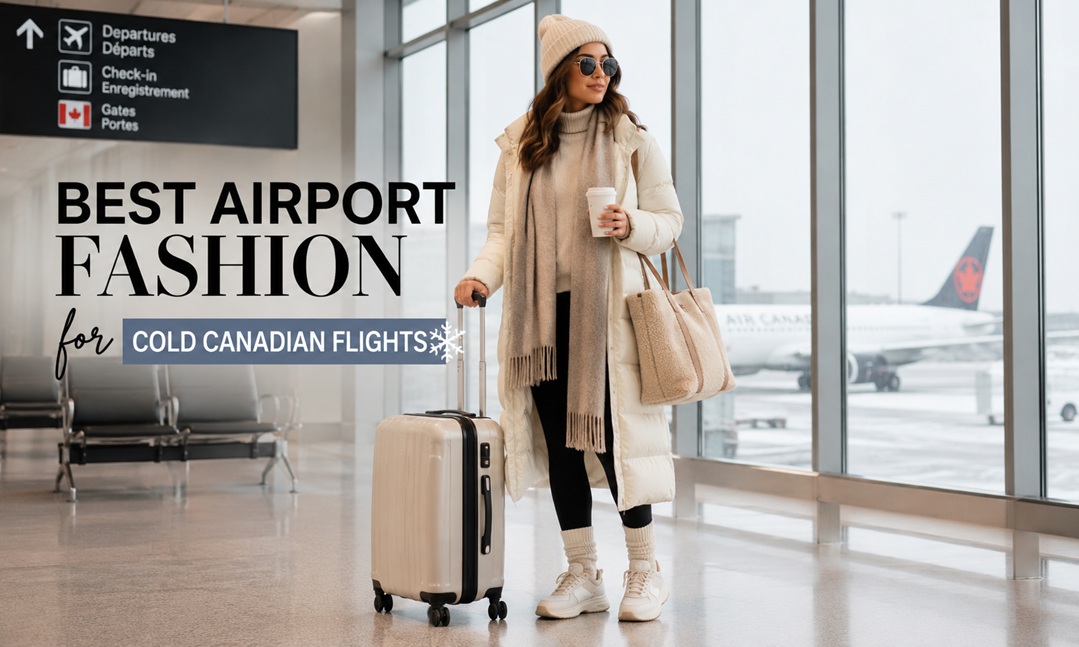
Soft leggings, an oversized knit, and a longline puffer coat. Add a tote bag that doubles as your personal item. Clean, effortless, and warm enough for most domestic routes.
The Fashion-Forward Flyer
Wide-leg trousers in a thick fabric (ponte or wool-blend), a fitted turtleneck, and a tailored coat. This look transitions straight from the plane into a dinner reservation without a wardrobe change.
The Carry-On Only Warrior
Joggers with a slim fit, a thermal base, a quarter-zip fleece, and a packable down vest worn on the plane. Everything else fits neatly into a 22-inch carry-on. This is especially smart on routes like YYZ to YVR where checked bag fees add up fast.
Footwear, Accessories & the Details That Matter
Shoes That Won’t Betray You at Security
Slip-on boots or clean sneakers are your best bet. Avoid anything with excessive buckles, laces, or metal hardware — you’ll be untying and retying while 40 people stare at you. Chelsea boots in a suede or leather-look material are a great blend of style and function in Canadian winter airports.
The Right Scarf, Hat & Gloves Strategy
Bring them — just pack them smart. A chunky scarf doubles as a plane blanket (honestly better than the ones provided on short-haul flights). Fold your hat and gloves into your coat pockets so they’re easy to access when you step outside. No digging through your bag in minus-15 wind.
PRO TIPS — Expert Insight
| Wear your bulkiest item on the plane, not in your bag. It frees up bag space and keeps you warm in the jetway. Compression socks are non-negotiable on flights over 3 hours. Canadian air is dry, cabin pressure is low, and your ankles will thank you. Go neutral on your outer layer. A camel coat or black puffer pairs with everything and photographs well for arrival shots. Avoid dark fabrics on white airplane seats if you’re wearing light-coloured clothing underneath — static cling is real. |
COMMON MISTAKES TO AVOID
- Wearing jeans on a 5-hour winter flight. They’re stiff, they don’t breathe, and they wrinkle badly. Save them for the destination.
- Forgetting to hydrate. Cabin air is extremely dry, especially on Air Canada’s transatlantic routes. Bring a refillable water bottle.
- Packing your coat instead of wearing it. You’ll need it before you even reach the gate.
- Choosing fashion boots over practical ones. Knee-high stiletto boots look great — until you’re running to catch your connection at YYZ’s Terminal 1.
- Wearing heavy perfume or cologne. Cabin air recirculates. Your fellow passengers will not appreciate it.
FAQ — People Also Ask
What should I wear on a flight to Canada in winter?
Layer up. Start with a thermal or merino base, add a mid-layer like a chunky knit or fleece, and finish with a removable coat. Slip-on footwear, compression socks, and a scarf you can use as a blanket round out the ideal outfit.
Are Canadian airports cold inside?
Generally no — major Canadian airports like Pearson, Vancouver, and Calgary are well-heated inside. The cold hits when you’re outside at the curb, in the jetway, or walking to a remote stand. Dressing in layers means you can adjust quickly.
What’s the best outfit for a long-haul flight in cold weather?
For long-haul flights departing from Canada, prioritize comfort above everything. Soft trousers or well-fitted joggers, a breathable thermal base, a mid-layer fleece, and a puffer coat you can use as an extra blanket. Compression socks are essential for flights over 4 hours.
Can I wear a puffer jacket through airport security in Canada?
Yes — you’ll just remove it at the security checkpoint like any other coat. A slim or mid-weight puffer is easier to deal with than a bulky parka, and it takes up less room in the overhead bin.
What shoes are best for winter airport travel in Canada?
Slip-on ankle boots or clean, minimal sneakers. They’re easy at security, warm enough for the walk outside, and versatile enough to wear at your destination. Avoid heavy winter boots unless you’re heading straight into deep snow.
Wrapping It Up
The best airport fashion for cold Canadian flights isn’t about wearing your most expensive outfit — it’s about wearing the right one. Build your travel uniform around layers you can actually work with, shoes you won’t regret, and a coat you’ll be glad you wore instead of packed.
Start with that formula and you’ll handle everything from a freezing YYC morning to a stuffy Air Canada cabin to a breezy London arrival without ever reaching into your bag for a sweater.
Once you get your layering system dialled in, travelling through Canada in winter stops feeling like a logistics problem and starts feeling like an opportunity to actually look good doing it.