Most people first notice a softer jawline or looser skin in a photo. One day your face looks a little different. The jawline isn’t as sharp, the cheeks sit lower than they once were, and the skin around the neck has lost some of its firmness. Side-profile photos often make the change easier to spot than the bathroom mirror. From your mid-twenties onward, collagen production gradually slows, leaving the skin with less of the support that once kept everything firm.
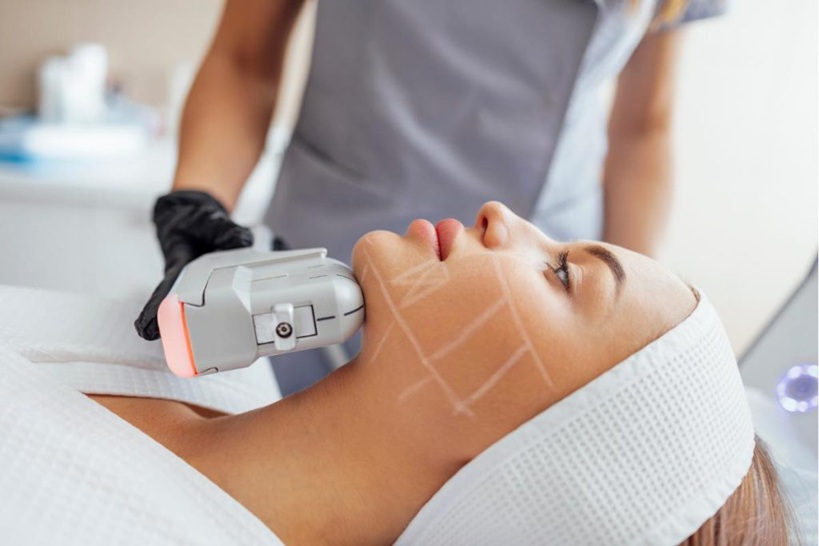
Not everyone who notices those changes wants surgery. HIFU treatment, or high-intensity focused ultrasound, has become a popular option because it stimulates new collagen beneath the skin without incisions or a lengthy recovery. Rather than tightening the surface, it targets the SMAS (superficial musculoaponeurotic system), the same supportive layer surgeons adjust during a facelift. Focused ultrasound reaches that depth without disturbing the outer layer of skin.
How HIFU Stimulates Collagen
During treatment, ultrasound waves are focused at several depths beneath the skin, most commonly 1.5, 3.0, and 4.5 millimetres. The waves generate little heat until they converge at a precise point. That tiny area reaches between 60 and 70 degrees Celsius, but only for a fraction of a second, while the surrounding tissue remains unaffected.
That controlled heat prompts fibroblasts into action. They begin producing fresh collagen and elastin, a process known as neocollagenesis. Some of the collagen already present tightens right away, but that isn’t where most of the lift originates. The real change unfolds over the following weeks, as new collagen strengthens the skin’s underlying structure.
HIFU Compared With Other Non-Surgical Treatments
Clients often ask how HIFU compares to radiofrequency (RF), since both are marketed as non-surgical tightening options. The distinction lies in depth. RF stays closer to the surface, which makes it well-suited to milder laxity or texture concerns. HIFU reaches further down, including the SMAS layer, which is why practitioners tend to recommend it for more noticeable changes around the jawline and neck.
Why Results Take Time
Most people don’t leave the clinic looking dramatically different, and that’s by design. HIFU initiates a repair process rather than producing an immediate lift. The skin may feel slightly firmer at first, but the clearest improvement typically appears over the following two to three months, as collagen continues to develop.
Recovery is generally straightforward. Mild redness, warmth, swelling, or tenderness may last a few hours or a couple of days, while temporary numbness or light bruising is less common. Most people return to work and normal activities the same day. Clinics such as Belle Clinic in London typically factor this same-day recovery into their aftercare guidance, since the procedure carries none of the downtime associated with surgical alternatives.
Who Benefits Most?
HIFU works best for mild to moderate skin laxity. A softer jawline, mild jowling, or slight looseness beneath the chin usually respond better than more advanced sagging. Many suitable candidates are in their late thirties through their fifties, although skin quality often matters more than age.
The procedure isn’t suitable for everyone. Pregnancy, active skin infections, open wounds, and certain implanted medical devices, including pacemakers, are common reasons to postpone treatment. It also has limits. HIFU cannot remove excess skin, and it won’t achieve the same degree of lift as surgery. A thorough consultation should set out these limits clearly, before anyone arrives expecting facelift-level results. For those who’ve only recently noticed looser skin, HIFU is worth considering before surgery enters the conversation.