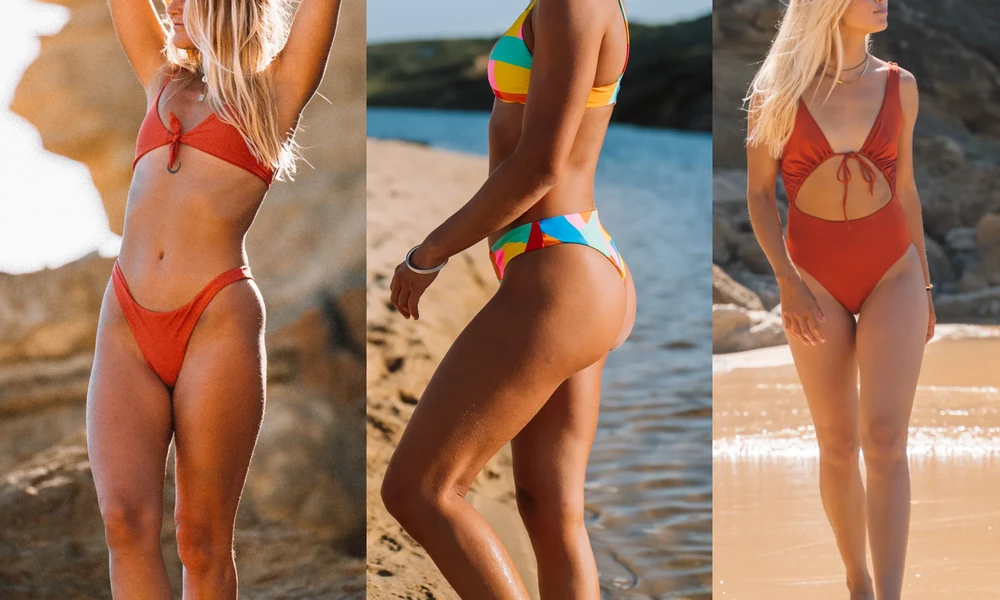
The top often gets the attention, but the bottom decides whether a bikini feels comfortable all day. Coverage, waistband height, leg shape, and fabric all change how a bikini looks and stays put. This guide breaks down the main bikini bottom types so you can choose with confidence.
Start With Coverage
Coverage describes how much of the hips and seat the back panel covers.
- Full coverage gives the most protection and suits swimming, active play, and anyone who prefers a modest look.
- Medium coverage is the everyday middle ground, popular for its balance of comfort and style.
- Cheeky shows more of the seat with a playful, youthful feel.
- Brazilian has a narrow back panel and the least coverage, designed for sunbathing and minimal tan lines.
Remember that fabric thickness and elastic tension change how much coverage you actually get, even with the same cut.
Understand Rise Height
Rise is where the waistband sits on your body.
- High-waisted sits at or above the navel, defines the waist, and smooths the stomach, with a retro feel.
- Mid-rise sits around the hips or just under the navel and works for almost everyone.
- Low-rise sits across the pelvis and creates a longer-looking torso.
If you’re between sizes, choose the rise that feels most comfortable first. Then adjust the rear coverage to fine-tune the look.
Pairing Coverage and Rise
The two settings work together, and some combinations stand out:
- Full coverage with high rise is secure and supportive, great for active beach days.
- Medium coverage with mid-rise is the most adaptable pairing, a dependable everyday option.
- Cheeky with low rise gives a daring, trend-led look but should be tested for slipping during movement.
- Brazilian with high waist combines a bold cut with tummy-smoothing, as long as the front seams lie flat.
Leg Cuts Change Proportions
The shape of the leg opening affects how long your legs appear. High-cut and V-cut styles angle upward toward the hip, which makes legs look longer and gives an athletic line. Low-rise, straight-cut styles draw the eye across the hips and can make legs look shorter on some frames. High-waisted styles emphasise the natural waist.
A simple styling tip: pair a high-cut bottom with an angled or V-neck top, and a straight waistband with a classic top for a balanced finish.
Matching Cuts to Your Frame
These are guidelines, not rules, but they’re a useful starting point.
- Pear-shaped: a high-cut leg with a smooth mid-rise waistband lengthens the legs and avoids pinching at the hips.
- Hourglass: retro high-waisted or medium-coverage mid-rise bottoms show off the waist while supporting the seat.
- Athletic or straight: cheeky or Brazilian cuts with side ties add curve and definition.
For fuller thighs, high-cut openings and adjustable side ties relieve pressure, and smooth, bonded edges help prevent marks.
Fabric Is Half the Fit
Even a perfect cut fails in the wrong material. Two blends dominate swimwear.
Nylon and spandex (around 80/20) feels soft and keeps its shape well, which makes it popular for fashion and resort styles. Polyester and spandex feels slightly firmer and resists chlorine and fading, making it better for frequent pool use.
Look for these quality markers:
- Stretch: four-way stretch moves with you in every direction.
- Elastane content: about 15-25% gives good recovery. Too little and bottoms ride up, while too much can break down faster in sun.
- Weight: a fabric of around 180-200 GSM, ideally with lining, helps prevent see-through patches when wet.
- Sustainability: recycled polyester and regenerated nylon offer eco-friendlier options with the same performance.
Cotton and hemp may sound natural, but they soak up water and sag, so they don’t suit swim bottoms.
Is Brazilian Too Revealing?
It depends on your comfort and activity. Brazilian cuts suit sunbathing and relaxed beach days but aren’t ideal for surfing or waterskiing. If you’re unsure, a cheeky cut is a balanced middle ground. Snug leg elastics, a lined gusset, and secure side tabs also help any minimal cut stay in place.
What to Expect Next
Expect cleaner finishes with bonded edges, textured recycled ribs, and mix-and-match sets with solid bottoms and printed tops. High-cut and V-front shapes with slim side straps are still going strong. If you’re matching a top, explore the types of bikini tops to complete the set.
A Quick Fit Test Before You Buy
Before committing to any bottom, try a few simple movements. Squat, sit, and bend forward to see whether the waistband rolls or the leg openings dig in. Check that the back panel stays centred and that the lining feels smooth against the skin. If you’re buying online, look for clear size charts and check the fabric details, since stretch and lining quality tell you as much as the cut does. A bottom that passes these checks will feel just as good after hours at the beach.
Final Thoughts
Great bottoms come from four decisions: coverage, rise, leg cut, and fabric. Match each to your body and activity, and you’ll end up with a bikini that looks good and stays put. Always do a movement test before committing, so you know how it behaves when you sit, stretch, and swim.